Brandeezy Brand image creation
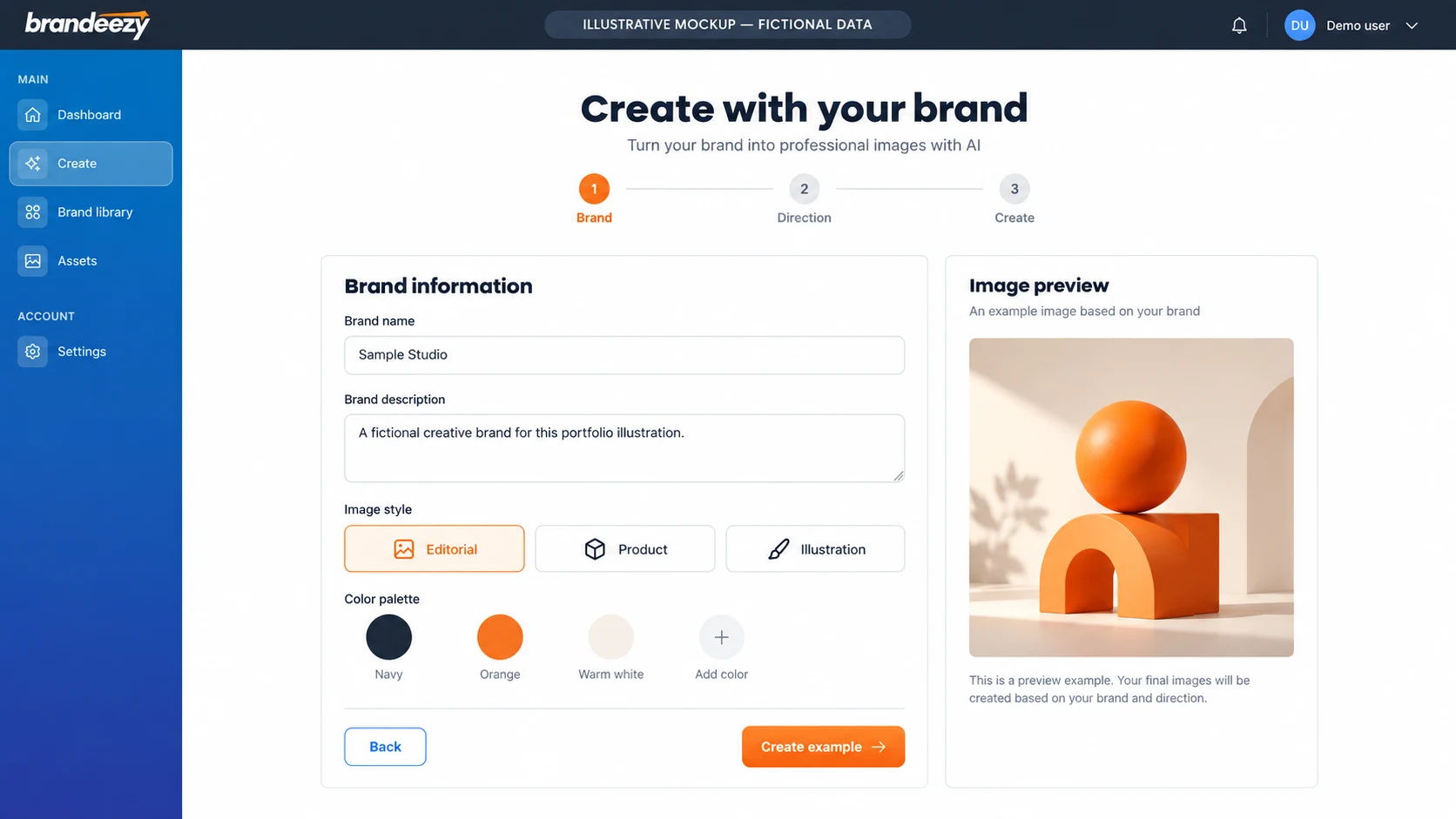
Give the next image the context of the whole brand.
How Brandeezy combines reusable Brand DNA, image generation, editing, and an organized asset library for an ongoing creative workflow.
- Starting point
- Brand DNA
- Creative loop
- Generate · edit · save
- Organization
- Library by brand
The creative brief
The brief should not start from scratch every time.
A business rarely needs just one image. It needs website visuals, campaign concepts, social content, and new variations as its work changes. Each request carries the same background information: the logo, the colors, the business, and the visual direction the team wants to maintain.
Reconstructing that context for every prompt makes image generation harder to repeat. Even a detailed request can leave the next person guessing which references were used or where the approved version was saved.
Brandeezy gives that context a persistent home through Brand DNA. Logos, colors, website context, industry information, and style references become reusable inputs to the creative process. A new generation starts with the brand already in view.
One brand context, different kinds of scenes.

Generation is one stop in the working process.
Establish the brand
Save the identity and reference material that should carry across requests. Brand context is reusable, while each image can still have its own purpose.
Explore variations
Generate images around a new brief, including batches when the task calls for alternatives. Comparing directions is part of the work.
Refine the selection
Use editing and regeneration to revisit an image. The creator can respond to a specific result instead of restarting the entire brand brief.
Keep the useful assets
Organize the outputs in the brand’s library. The next request starts with both the identity and a history of creative work.
Separate what stays consistent from what changes.
Brand-level context
The reusable identity
The logo, palette, industry, and visual references belong to the brand. Keeping them together makes them available across many creative requests and helps collaborators start from the same source.
Image-level direction
The purpose of this asset
The scene, composition, format, and intended use belong to the current request. Those decisions need room to vary without rebuilding the identity that surrounds them.
The library is part of the product, not a download folder.
An image can be visually successful and still be hard to use if nobody can find the approved version. Brandeezy’s library groups work around the brand, bringing creation and retrieval into the same product. That makes organization a continuation of the creative workflow.
The product also connects usage and credits to generation. Those controls are part of making a repeatable service around image models: users need to understand what they are creating and where the results will live.
Reusable context, revision tools, and a brand-organized library give each image a place in an ongoing creative process. The product keeps the identity, the current request, and the saved result connected so a collaborator can pick up the next piece of work.
For your business
When your brand needs a steady stream of new assets
Start with the context people keep retyping. Then connect generation to the decisions, edits, and organization that make the output useful.
Services behind this work
- Custom Business Software
Connect quoting, scheduling, job records, and invoicing around your actual workflow.
- AI Workflow Automation
Turn calls, documents, and job updates into useful records and actions.
Continue exploring
- Slotica
From a game idea to the parts that make it playable.
- Cougar Companies
A public website and the business system behind it.